


Selecting the right tennis racket is crucial for improving your game and preventing injury. With countless specifications to consider, this comprehensive guide will help you make an informed decision based on eight key parameters that determine how a racket performs.
Following are the key factors that will help you buying your perfect tennis racket.
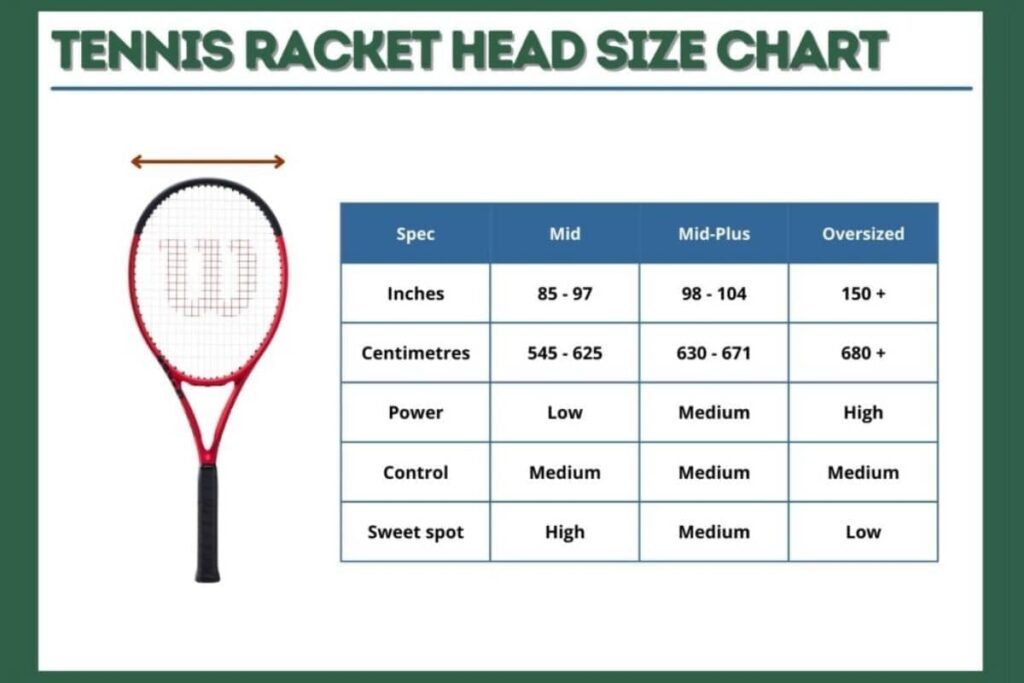
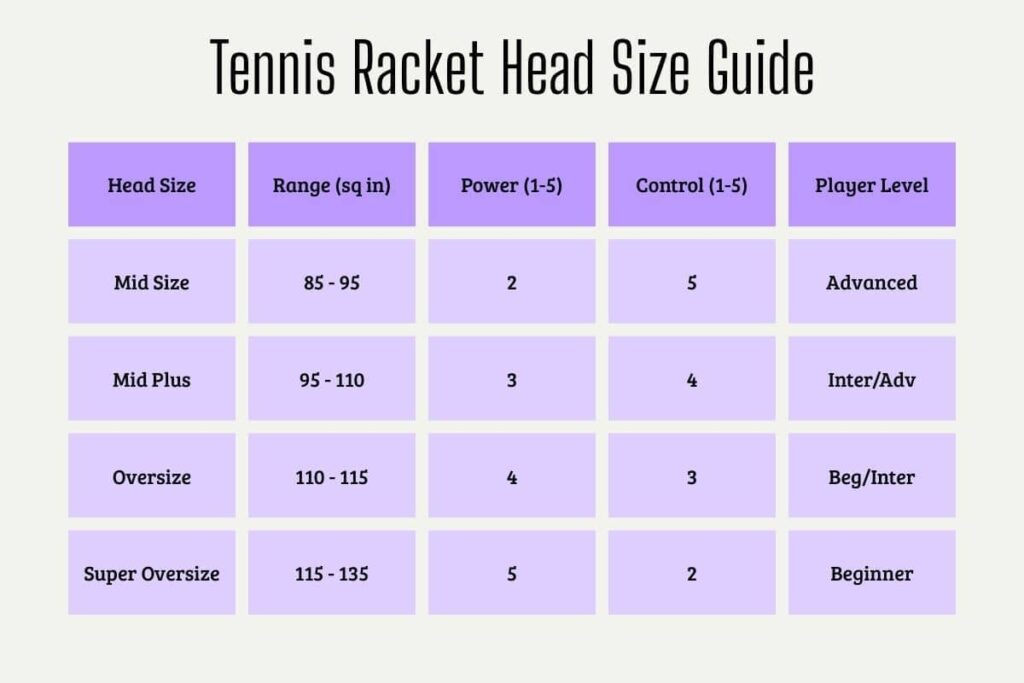
Head Size: Power vs. Control
Key Considerations:
- Larger head sizes (103+ sq. in.) provide bigger sweet spots and more power, making them ideal for beginners who need forgiveness on off-centre hits.
- Smaller head sizes (98 sq. in. or less) offer enhanced control and precision, preferred by advanced players who generate their own power.
- Mid-plus sizes (99-102 sq. in.) offer the best balance for intermediate players.
Length: Reach and Leverage
The standard tennis racket length is 27 inches, though extended versions can reach up to 29 inches. Longer rackets provide additional leverage and power, particularly on serves, but sacrifice manoeuvrability.
Recommendations:
- Standard length (27″): Suitable for most players
- Extended length (27.25-29″): Benefits players seeking extra reach and serve power
- Junior lengths: Range from 17-26 inches based on age and height
Weight: Power vs. Manoeuvrability
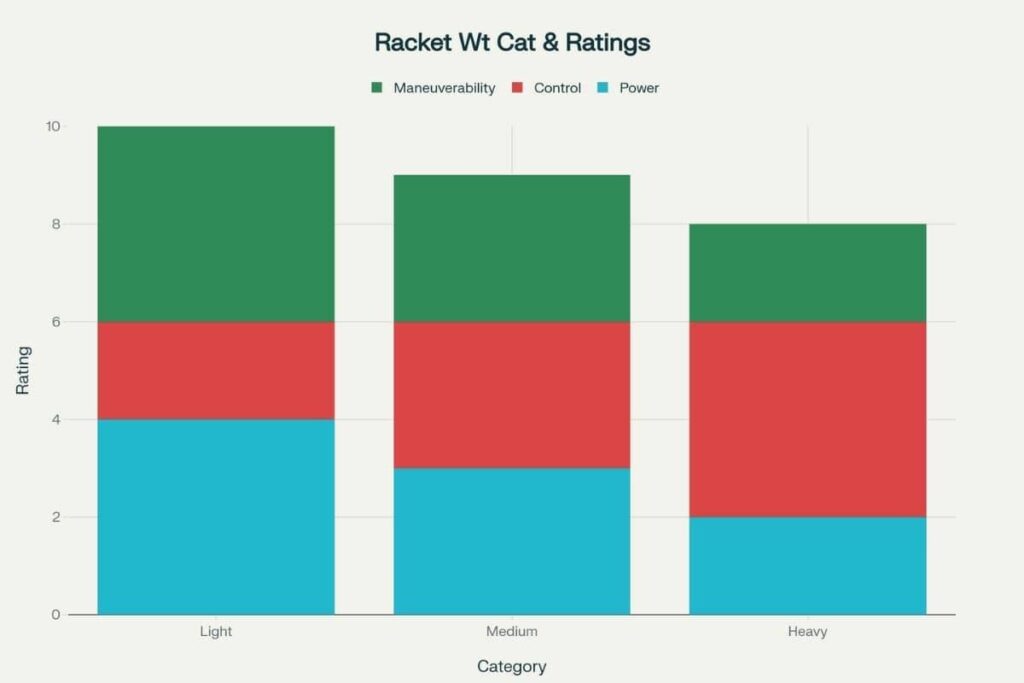
Tennis racket weight significantly affects how the racket feels and performs during play.
Weight Categories:
- Light rackets (225-280g): Easy to swing, suitable for beginners and players with physical limitations
- Medium rackets (280-300g): Balanced performance for intermediate players
- Heavy rackets (300-340g): Maximum control and stability for advanced players
Balance: Weight Distribution
Balance point determines how weight is distributed throughout the racket, affecting power and manoeuvrability.
Balance Types:
- Head-heavy (340mm+): Generates more power, suitable for beginners seeking easy power
- Even balance (320-340mm): Provides balanced performance for all-court players
- Head-light (315mm or less): Enhances manoeuvrability and control for advanced players
String Pattern: Spin and Control
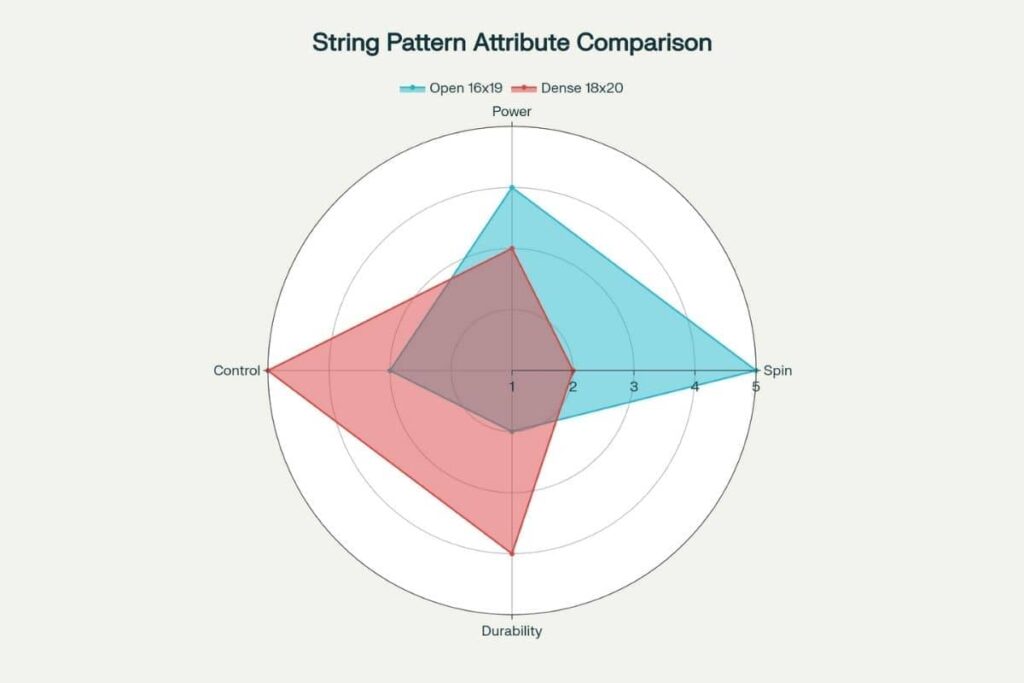
String patterns describe the number of main (vertical) and cross (horizontal) strings in the racket.
Common Patterns:
- Open patterns (16×18, 16×19): Generate more spin and power but sacrifice durability
- Dense patterns (18×20): Provide superior control and precision with better string durability
Swingweight: Feel and Stability
Swingweight measures how heavy the racket feels when swinging, affecting power generation and manoeuvrability.
Swingweight Guidelines:
- Beginners: 290-310 SW for easy manoeuvrability
- Intermediate: 310-325 SW for balanced performance
- Advanced: 320-340 SW for maximum power and stability
Higher swingweight provides more power and stability but reduces manoeuvrability, while lower swingweight offers easier handling but less power from the racket itself.
Beam Width: Power and Feel
Beam width refers to the thickness of the racket frame, typically ranging from 18-28mm.
Beam Categories:
- Thin beams (18-21mm): Provide excellent control and feel, preferred by advanced players
- Average beams (22-24mm): Offer balanced power and control for intermediate players
- Thick beams (25-28mm): Generate maximum power, ideal for beginners
Thicker beams create stiffer frames that return more energy to the ball, while thinner beams offer better feel and flexibility.
Grip Size: Comfort and Control
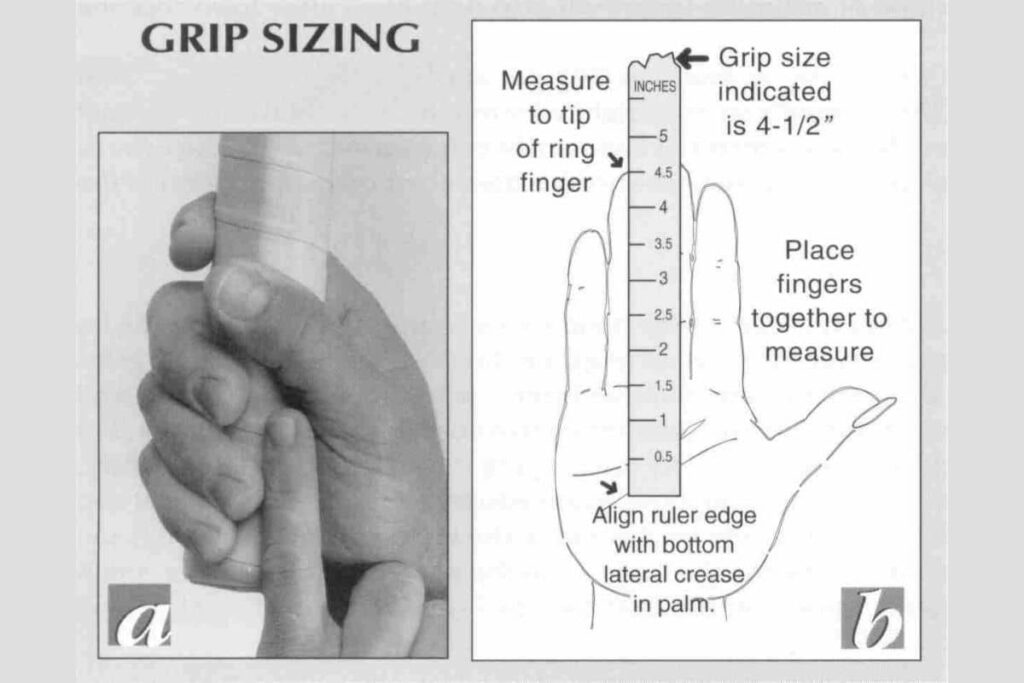
Proper grip size is essential for comfort, control, and injury prevention.
Sizing Guidelines:
- Size 0 (4″): Junior/very small hands
- Size 1 (4 1/8″): Small hands
- Size 2 (4 1/4″): Most women, small men
- Size 3 (4 3/8″): Most men
- Size 4 (4 1/2″): Large hands
- Size 5 (4 5/8″): Very large hands
Measurement Methods:
- Ruler test: Measure from the tip of your ring finger to the second crease in your palm.
- Index finger test: Your index finger should fit comfortably between your ring finger and palm when gripping the racket.
Choosing Based on Playing Level
Beginner Recommendations
- Head size: 105-110 sq. in. for maximum forgiveness
- Weight: 260-290g for easy handling
- Balance: Head-heavy for extra power
- String pattern: Open (16×19) for spin and power
- Beam width: Thick (25-28mm) for power generation
Intermediate Recommendations
- Head size: 98-102 sq. in. for balanced performance
- Weight: 280-300g for developing control
- Balance: Slightly head-light to even
- String pattern: 16×19 for versatility
- Beam width: Average (22-24mm) for balance
Advanced Recommendations
- Head size: 95-100 sq. in. for maximum control
- Weight: 300-320g for stability
- Balance: Head-light (310-320mm)
- String pattern: Dense (18×20) for precision
- Beam width: Thin (18-21mm) for feel
String Tension Guidelines
String tension significantly affects racket performance.
Tension Ranges:
- Lower tensions (40-50 lbs): More power and comfort
- Higher tensions (50-65 lbs): Better control and precision
Material-Specific Recommendations:
- Nylon/Synthetic gut: 50-60 lbs
- Polyester: 44-54 lbs (string 2-3 lbs lower due to stiffness)
- Hybrid setups: Polyester 2 lbs lower than multifilament
Maintenance and Care
String Replacement
- Recreational players: Restring twice per year minimum
- Regular players (2-3x/week): Every 4-6 weeks
- Competitive players: More frequently based on performance needs
Storage and Handling
- Store rackets in moderate temperatures to prevent string tension.
- Use racket covers to protect from damage.
- Clean strings regularly with a damp cloth.
Conclusion
Choosing the right tennis racket requires careful consideration of your playing level, style, and physical capabilities. Focus on finding the optimal balance between power and control based on your skill level, and don’t hesitate to demo different models before making your final decision. Remember that the most expensive or popular racket isn’t necessarily the best for your game – the perfect racket is one that complements your playing style and helps you improve your performance while staying comfortable and injury-free.
Frequently Asked Questions
Q: How often should I restring my racket?
A: Follow the rule of restringing as many times per year as you play per week. Recreational players should restring at least twice annually.
Q: Should I choose a smaller grip size if I’m between sizes?
A: Yes, it’s easier to build up a smaller grip with overgrips than to reduce a larger one. Most men use size 3 (4 3/8″), while most women use size 2 (4 1/4″).
Q: What string tension should I use?
A: Start with manufacturer recommendations, typically 50-60 lbs for synthetic strings and 44-54 lbs for polyester. Adjust based on your power needs and comfort.
Q: How do I know when to replace my racket?
A: Replace your racket when you notice decreased performance, visible frame damage, or when your playing level significantly changes, requiring different specifications.
Q: Can I modify my racket’s specifications?
A: Yes, you can adjust weight and balance using lead tape, and grip size with overgrips or heat shrink sleeves. However, major changes may affect the racket’s intended performance characteristics.